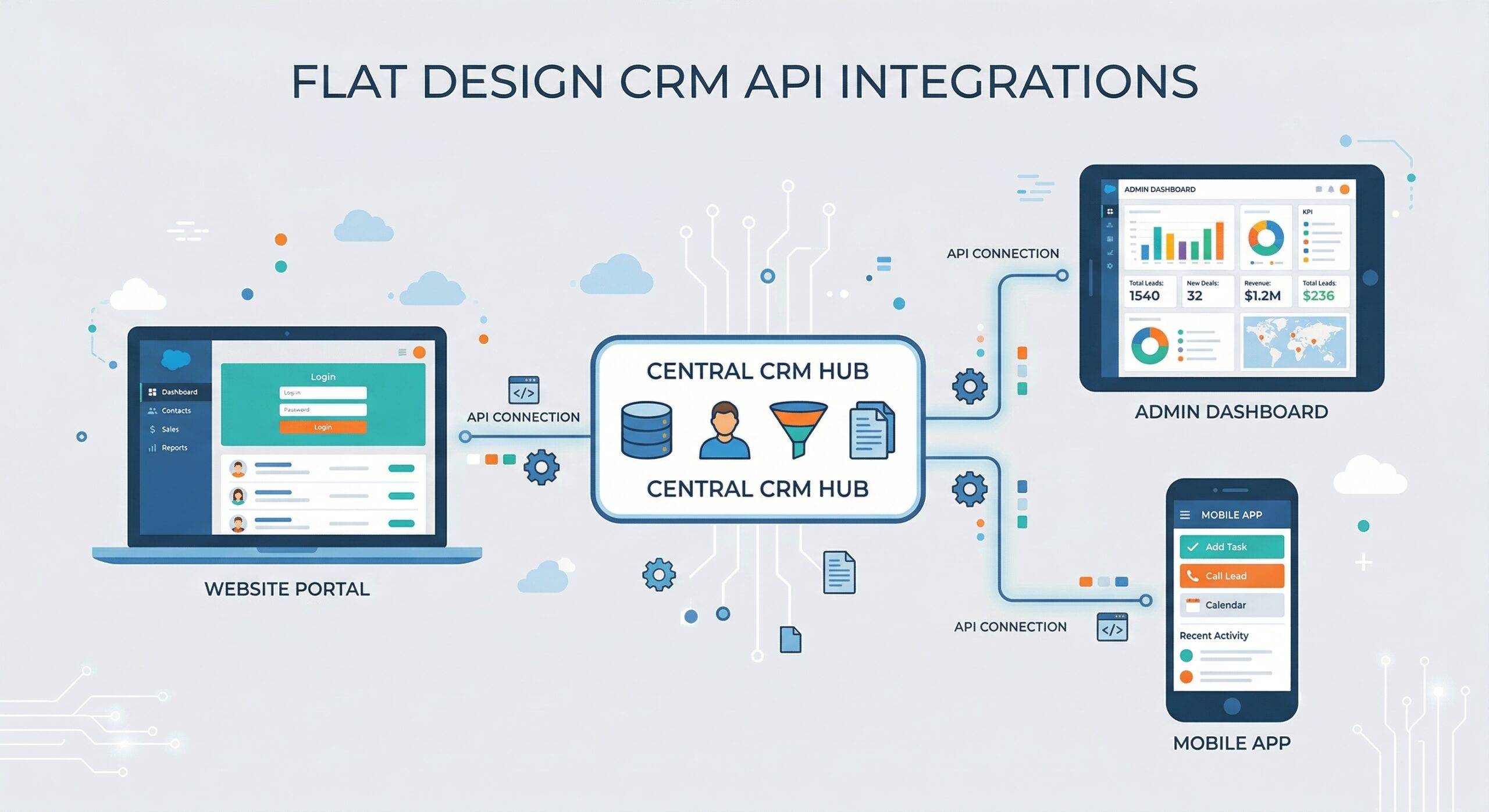
The Data Silo Problem
Your CRM holds client records, invoices, project timelines, and task assignments. But without an API, that data is trapped inside a single interface. Sales teams cannot feed CRM data to dashboards. Marketing cannot trigger automations from new client events. Mobile apps cannot display live project status.
Without APIs, every integration requires a developer to write custom database queries. That is expensive, fragile, and does not scale.
What APIs Enable for CRM
When your CRM exposes data through structured API endpoints, the entire ecosystem changes:
- Real-time dashboards – Pull live invoice totals, project progress, and sales metrics into external dashboard tools
- Mobile access – Build Android and iOS apps that read and write CRM records
- Workflow automation – Connect to Zapier, Make.com, and n8n for event-driven workflows
- Website integration – Display CRM data on WordPress without database access
- Cross-system reporting – Combine CRM data with accounting, eCommerce, and support systems
REST and GraphQL: Two Approaches
Modern CRM APIs typically offer two query styles. REST and GraphQL serve different needs:
| Approach | Best For | Example |
|---|---|---|
| REST API | Simple CRUD, integrations | GET /api/v1/clients?sort=-id |
| GraphQL | Complex queries, mobile apps | { clients(limit:10) { company email } } |
Data Builder for Perfex CRM provides both from a single module with shared token-based authentication.
The Security Layer
Exposing CRM data requires production-grade security:
- Scoped API tokens with per-table CRUD permissions
- IP and domain whitelisting
- HMAC-SHA256 request signing via Authentication API
- Rate limiting per token
- OWASP security headers on every response
- RFC 9457 standardized error handling
From Isolated CRM to Connected Platform
APIs do not just connect systems – they transform your CRM from a data entry tool into a business intelligence platform. With visual report building, outbound webhooks, and embeddable charts, your CRM data works everywhere it is needed.
Explore the API: API Explorer and Documentation | Get Data Builder
Leave a Reply